

Read · Shipping from China
A €10 Parcel From China Now Carries €9 in EU Charges. On 1 November, It Jumps to €15.
The PFC Royal Logistics team, Shenzhen, since 2010 · Facts checked
That is the EU's own worked example, not ours. If you sell to the EU from China, here is what it does to your margin, the one fact that changes the sum, and what to do before 1 November.
A pen, a notebook and a key ring. Value: €10.
Charges since 1 July: €9. From 1 November: €15.
Read that again. The charges are bigger than the goods.
It is an extreme case, and the EU chose it to make a point. But it shows you how the rule works. The charge does not look at how much your goods cost. It counts items.
Picture Monday 2 November
A customer in Lyon orders a phone case, a screen guard and a cable from your shop. The goods cost about €30. She pays you €30 and feels good about it.
Three days later a courier rings her doorbell. He will not hand over the parcel until she pays another €15.
Three different items. €3 duty and €2 fee on each.
She writes to you. Or she refuses the parcel. Or she pays, and leaves you a one-star review.
Maybe you saw it coming and paid the €15 yourself. Then your profit on that order is gone.
That is the 2am worry. And it is not just a story. The EU says that when the seller does not collect these charges at checkout, the delivery company will ask the buyer to pay before the goods are handed over.
A buyer in the Netherlands already lived it in July, when only the €3 was in force:
"On top of the regular 3€ per item line, you also have to factor in the handling costs from the import which was 6€ if I remember correctly and 10€ that postnl charges for the administration."
A Dutch buyer, Reddit, July 2026. Read the post
That is one buyer and one carrier. Fees differ. But he paid far more than €3. Yours will pay more than €5.
What you will learn on this page
- Why 5 T-shirts clear for €3, but 1 T-shirt and 1 watch clear for €6.
- Why the €2 fee hurts cheap items most, because it ignores the price.
- Why a returned parcel does not get the charges back.
- The one fact that decides whether you pay these charges at all.
- The break-even table: at what price the charge starts to hurt.
- A calculator that shows your monthly cost, and a fair test of parcels against bulk.
- Your 7-step plan for the days before 1 November.
Four bills land on one small parcel
The €3 duty applies to parcels worth €150 or less. The €2 handling fee applies whatever the value. Above €150, normal duty replaces the €3, and the €2 still comes on top.
Both are due from the business that files the customs form. That means you, or your carrier acting for you. They are allowed to pass the cost to your buyer.
What counts as an "item"?
Items, not pieces. Items, not parcels. An item is goods with the same tariff classification, the same description and the same origin.
| In the parcel | Items | From 1 Nov |
|---|---|---|
| 5 T-shirts, same type | 1 | €5 |
| 2 identical pens | 1 | €5 |
| 1 T-shirt + 1 watch | 2 | €10 |
| Pen + notebook + key ring | 3 | €15 |
| Case + screen guard + cable | 3 | €15 |
The first 4 rows come from the EU's and Ireland's own examples, with the €2 fee added. The last row uses the same rule.
So a seller of one product in many sizes is in a good spot. A seller of mixed baskets is not.
The break-even table
The charge is flat. So the cheaper the item, the harder it bites. Here is one item at €5 of charges:
| Item price | €5 charge is |
|---|---|
| €10 | 50% of the price |
| €20 | 25% |
| €30 | 17% |
| €50 | 10% |
| €100 | 5% |
| €150 | 3% |
Look at where your own best sellers sit in this table. If they are in the top three rows, keep reading.
And if the customer sends it back?
This is the part most sellers miss.
The €2 handling fee is not refunded, even when the goods are faulty. The €3 duty is not refunded either, unless the goods are faulty.
So a return costs you the shipping back, the item, and the charges. On a €14 item, that is the whole order and then some.
The one fact that decides whether you pay at all
Here is the line that matters. It comes from Ireland's customs authority:
"There is no Customs Duty or Union Handling Fee where goods are based in Ireland, Northern Ireland or in another EU Member State at the time the goods are ordered."
Revenue, 29 September 2026. Read the full noticeRead it slowly. The charge depends on where your goods are when the customer clicks Buy.
If the goods are still in China, every order crosses the border alone, with its own form and its own charges.
If the goods are already in the EU, the order is a local delivery. The goods paid normal duty and import VAT once, when they came in as a bulk shipment.
Lane 1: ship each order from China
- Customer orders.
- You send a parcel from China.
- Customs form for that parcel.
- €5 for each item, plus VAT.
- Courier may ask your buyer to pay at the door.
Charges: on every order.
Lane 2: stock first, then sell
- You ship stock in bulk, once.
- Customs: normal duty and VAT on the bulk shipment.
- Stock sits in the EU.
- Customer orders. Local delivery.
- No flat €5 on the order.
Charges: once, at normal rates.

Lane 2 is not free, and it is not for everyone. You pay for stock before you sell it. You need a place in the EU to hold it. Normal duty and VAT still apply. And if the stock does not sell, you are stuck with it.
That is why you do the sum first.
Do the sum for your shop
Parcel charges each month: €2,000
Each year: €24,000
On one item, that is 33% of the price.
Normal duty on the same goods in bulk: €300 a month
Parcel charges: parcels × items × €5 (the €3 duty plus the €2 fee). The bulk line uses the duty rate you type. 5% is only a starting number. Your tariff code sets the real rate, so ask your customs broker. The sum leaves out VAT, freight, EU delivery and carrier fees on both sides. Add those before you decide.
The honest test: parcels or bulk?
Answer 3 questions.
- Do you sell the same products again and again? Stock only works for products that sell.
- Can you pay for stock before it sells? Bulk means cash out first.
- Is your monthly charge in the sum above bigger than the duty plus the extra freight and storage? Ask us for the freight price. Ask your broker for the duty.
Three yeses? Ask for a bulk quote. One or two? Parcels may still be right for you. Then raise prices a little, pass the charge on at checkout, or ask us for a cheaper way to send parcels.
Either way, you will know your numbers before 1 November. Most sellers will not.
Your 7-step plan for before 1 November
- Count your items.For your 10 best sellers, count the items on a typical order. Remember: same type of goods is one item.
- Check your cheapest products.Use the break-even table. Mark any item where the charge is over 15% of the price.
- Decide who pays.You at checkout, or your buyer. Pick one on purpose. A bill at the door is the worst way.
- Show it at checkout.Ireland's customs authority says shops can collect the charges when the buyer pays. Then the price at checkout is the final price.
- Plan for returns.The €2 fee does not come back. Check that your returns rule still makes sense.
- Ask your carrier two things."What is your own fee on top?" and "How do you handle the product identifiers the EU requires from 1 November?"
- Get one bulk quote.Put it next to your sum. Then you decide with numbers, not a feeling.
Where PFC fits
We are PFC Royal Logistics. We work from Shenzhen, and have since 2010.
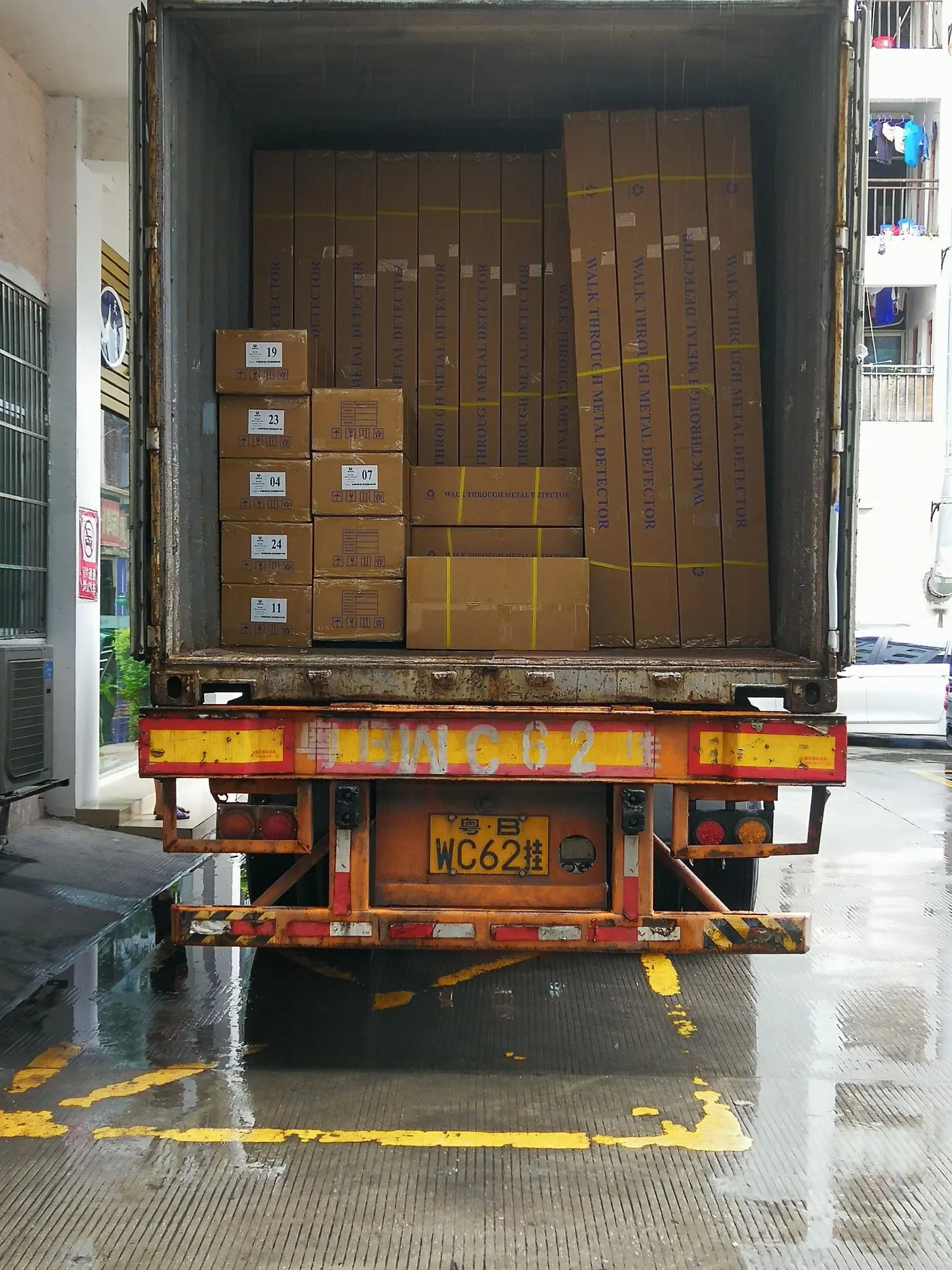
If you choose Lane 2, this is what we do for you:
- Your suppliers send their goods to our warehouse. We charge no receiving fee.
- We count and check the cartons, and tell you the result.
- We combine goods from many suppliers into one shipment, with one freight bill.
- We ship by air or sea, and clear customs at both ends.
- We deliver the bulk shipment to your EU warehouse or fulfilment centre. Then your orders go out as local deliveries.
5 questions to ask any forwarder before you pay
Buyers keep posting the same story online. A low quote at the start. Extra charges at the end.
"Careful with 'delivery cost' quotes from China warehouses. Many cover only the linehaul and leave you with destination fees, duties and customs charges on arrival."
A first-time importer, Reddit, September 2026. Read the post
Use these 5 questions. Ask them of everyone, including us.
- What is the full price, door to door? Get it in writing.
- Does it include the carrier's own admin fee in the EU?
- Whose name is on the customs form?
- Can I get the customs papers? They should show that duty and VAT were paid.
- How many days is storage free, and what is the fee after that?
What happens when you ask for a quote
- You tell us what you ship.The product, the weight, and the EU country it goes to. It takes 2 minutes.
- We reply within 24 hours.You get a price for bulk air freight or sea freight.
- You compare.Put our price next to your sum. Then you choose. A quote is free.
Quick questions
When did the €3 duty start?
On 1 July 2026. It applies to each item in a parcel worth €150 or less, and it runs until 1 July 2028. After that, normal EU duty rates apply.
When does the €2 handling fee start?
On 1 November 2026. Ireland's tax and customs authority says it is €2 per distinct item, and it applies whatever the value of the goods. It comes on top of the €3 duty.
What counts as one item?
Goods with the same tariff classification, the same description and the same origin. Two identical pens are one item. A pen, a notebook and a key ring are three. The EU's own example: 5 T-shirts pay the €3 once. 1 T-shirt plus 1 watch pay €6.
Who pays?
The business that files the customs declaration: the seller, or the delivery company acting for them. They can pass the cost to your buyer, either at checkout or at the door. VAT is extra.
Is it refunded if the customer returns the item?
The €2 handling fee is not refunded, even when the goods are faulty. The €3 duty is not refunded either, unless the goods are faulty.
Does the charge apply to goods already stored in the EU?
No. Ireland's tax and customs authority says there is no duty and no handling fee where the goods are already in an EU country when the customer orders them. Goods you import in bulk pay normal duty and import VAT instead.
Is bulk always cheaper?
No. Normal duty and VAT still apply. You also pay for stock before you sell it, and you need a place to hold it. Use the sum on this page, then ask for a quote to compare.
Does a quote from PFC cost anything?
No. A quote is free. Tell us what you ship, how much, and where it goes. We reply within 24 hours.
Where this comes from
- Ireland's tax and customs authority (Revenue), 29 September 2026: the Union Handling Fee, with worked examples
- European Commission, 8 June 2026: guidance on the temporary €3 duty and the Union handling fee
- EU Council, 12 December 2025: customs duty on small parcels from 1 July 2026
- A Dutch buyer lists the fees on one parcel, Reddit r/Netherlands, July 2026
- A first-time importer warns about quotes that leave out destination fees, Reddit r/freightforwarding, September 2026
Rules change. We checked these on 24 October 2026. Check again before you ship.